
Why there is no universal number
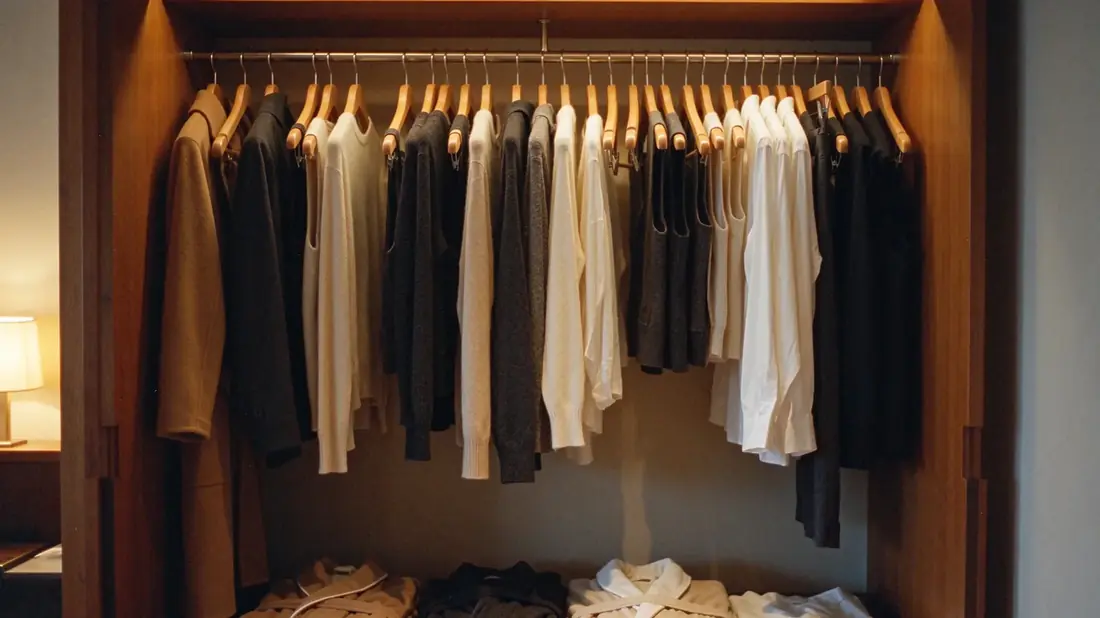
Every hotel has its own arrangement. One property puts two coat hangers and two shirt hangers in a standard room; another puts five of one type and none of the other; a resort with robes and poolwear needs a different set from a city hotel where the guest arrives with a suit bag. The number a buyer should order follows what the property has decided its rooms carry — not a figure from a supplier's brochure.
That is the first thing to establish, and it is a question for the hotel rather than for the factory: how many hangers does each room type hold, and of which type. Once that list exists, the arithmetic is simple. Without it, any total is a guess dressed up as a calculation.
The question to ask first
Not "how many hangers do we need" but "what does each room type carry, and how many of each". That is a housekeeping question, and housekeeping answers it in minutes because they make up the rooms every day. Ask it in the abstract and it produces a debate; ask it room by room and it produces a list.
What the property actually decides
Three things, in this order: the hanger types it wants in the room, how many of each per room type, and whether a replacement buffer is held. A hotel group may have a house standard covering all three; an independent property usually decides room by room. Either way the decision is theirs, and the order is the arithmetic that follows it.
Why suppliers still publish a standard
Because a buyer with no list has to start somewhere, and a published figure is a convenient starting point. It is also where orders go wrong: a number that suits a city business hotel gets carried into a resort, a serviced apartment or a hostel without the wardrobe changing with it.
The useful version of a supplier's standard is a range rather than a number — for example "4 to 6 per standard room, depending on the wardrobe format" — and even that is a prompt for the property's own decision rather than a substitute for it.
What we contribute
We can tell a buyer which hanger type suits which garment — a coat hanger with a wide shoulder for outerwear, a thinner frame for shirts and T-shirts — and we can do the arithmetic from their list. We do not tell a property how many hangers its rooms should have, because that answer depends on the wardrobe, the guest profile and the housekeeping routine.
What to ask the property for
The input sheet
Five lines turn a conversation into an order:
Counting a room in ten minutes
The fastest way to build the list is to stand in one room of each type with housekeeping and write down what is actually there: the rail length, the hanger types on it, and how many of each a made-up room carries. Ten minutes per room type produces a list that matches reality better than any discussion about standards.
Do it for the type with the highest occupancy first. The suite will be the outlier; the standard room will be the volume, and the volume is where the order is decided.
What a written house standard contains
A hotel group that has done this before hands over a document with three sections: the approved hanger list by type, the quantity per room type, and the replacement rule. Where a property has that document, the ordering conversation is short — the job is to map their model names to ours and confirm the sample.
Where it does not exist, the list is built from the rooms and signed off by housekeeping. That sign-off is worth having in writing: it is the difference between an order and an opinion.
Why the hanger type matters as much as the number
A "hanger" is not one object. The shoulder section is sized to the garment: a coat hanger has the widest shoulder section — 4.5 cm and up — a hoodie hanger sits around 3 cm, a shirt hanger is thinner again, and a T-shirt hanger is the thinnest at 2 cm or 1.2 cm. Ordering 400 "hangers" without saying which type produces 400 of whichever type the factory assumes, and a re-order that does not match.
Where a property has no opinion on the type, the garment list settles it: what hangs in the wardrobe, how heavy it is, and whether it is on display or folded away.
What the property often forgets
Public areas. Cloakrooms, gyms, spa lockers and meeting floors take hangers too, usually bought on the same order and left out of the same calculation. They are a small quantity and a different type — heavy-use coat hangers rather than guest-room sets.
| Input | Why it is needed |
|---|---|
| Room count by room type | standard, twin, suite, apartment |
| Hangers per room, by room type | the property's number, not a standard |
| Hanger type or mix per room type | coat, hoodie, shirt, T-shirt, trouser, security |
| Buffer percentage | whether they hold spares, and how many |
| Destination and required date | so the sample and production windows are quoted against a real deadline |
The arithmetic
The method
``` For each room type: hangers in that type = rooms × hangers per room Room block = the sum of those subtotals Buffer = room block × the agreed percentage Order quantity = room block + buffer ```
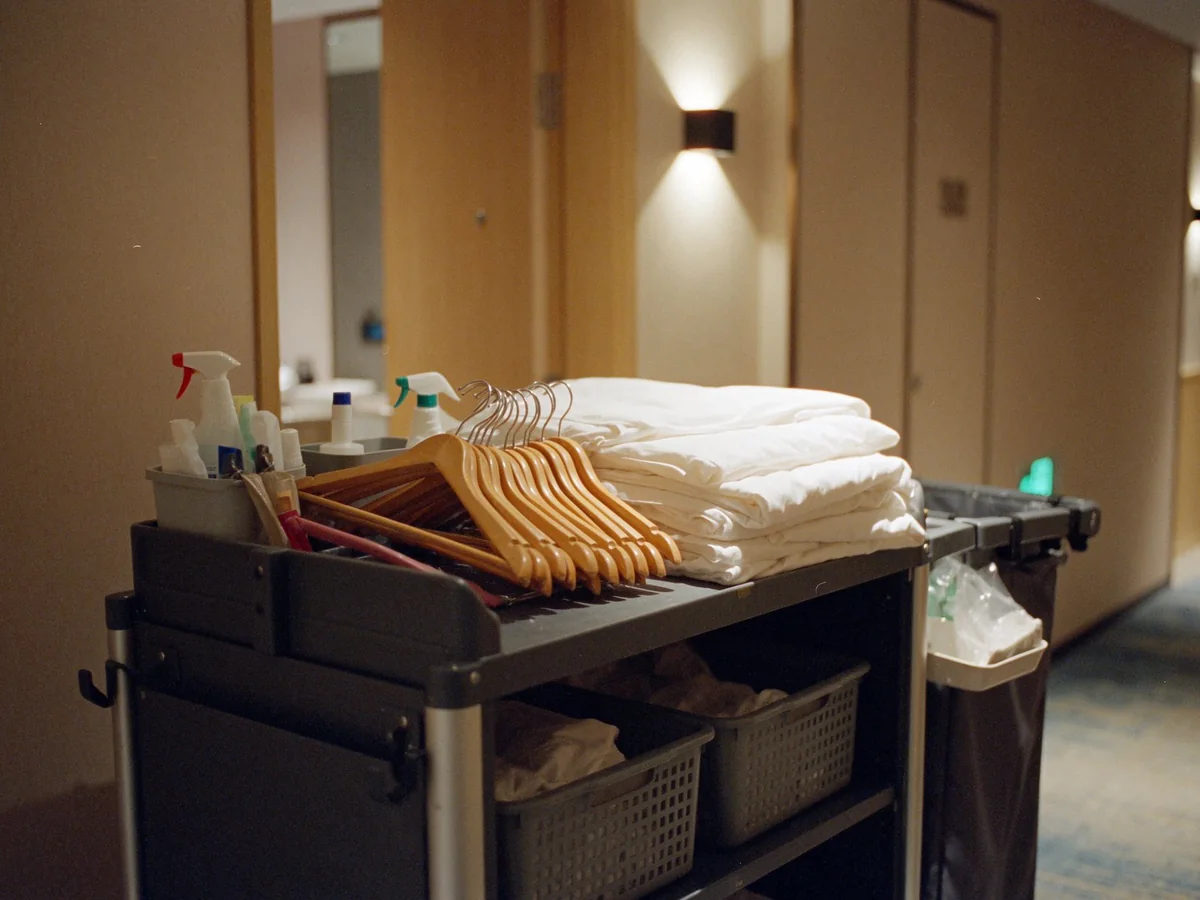
The shape of the calculation is fixed; the numbers inside it come from the property.
A worked example
The example below uses a mix a property might specify — 4 in a standard room, 5 in a twin, 7 in a suite — for a 200-room hotel with 120 standard rooms, 70 twins and 10 suites. The per-room figures are the property's choice, not a standard we impose; substitute the property's own numbers and the same arithmetic applies.
Two rules make this usable afterwards. Keep the buffer as its own line on the purchase order, so the property can see what it is holding. And keep the per-room figures on file: when a room type is added or converted, the list is updated rather than the total recalculated from scratch.
A second example, on a different list
A 140-room property that specifies 3 in a standard room, 4 in a twin and 6 in a suite, split 100 / 30 / 10:
Same method, different numbers, and a buffer of 10% because the property has a year of history behind it. That is the whole point of the method: it does not assume anything about the property's arrangement, only that the arrangement exists on paper.
When the property has no list yet
Build it with them, room type by room type, using the garment list as the input. A property that has never written the numbers down can usually produce them in an hour with housekeeping in the room — what is actually in the wardrobe, counted.
| Room type | Rooms | Per room (example) | Subtotal |
|---|---|---|---|
| Standard | 120 | 4 | 480 |
| Twin | 70 | 5 | 350 |
| Suite | 10 | 7 | 70 |
| Room block | 200 | — | 900 |
| Buffer (example: 15%) | — | — | 135 |
| Order quantity | — | — | 1,035 |
| Room type | Rooms | Per room | Subtotal |
|---|---|---|---|
| Standard | 100 | 3 | 300 |
| Twin | 30 | 4 | 120 |
| Suite | 10 | 6 | 60 |
| Room block | 140 | — | 480 |
| Buffer (10%) | — | — | 48 |
| Order quantity | — | — | 528 |
The buffer
How much to hold
Between 10 and 15 percent of the room block is the working range we quote, and the property chooses the figure. Fifteen percent suits a first order where there is no history of loss; ten percent suits a property that has tracked a year of consumption and knows its own rate.
Where the buffer lives
Centrally, ideally, with a monthly issue to floors. The failure mode is not a missing buffer but a buffer held in three places at once — a store carton, a floor float, and a linen room — with nobody able to count the total. When the stock cannot be counted, the reorder is a guess.
The buffer and the minimum order
Custom lines start at 150 pcs per model and colour. On a small property the buffer is often what brings a line up to its minimum — and a buffer spread across three models can leave each of them below the minimum and force a re-quote.
The practical rule: calculate the buffer on the total room block, then allocate it to the models in the same proportion as the rooms. If one model still falls short, either the buffer for that model is raised or the order is split between a stock line and a custom line.
Why the buffer is ordered with the block
A buffer from a second production run is a second batch, and a second batch is where colour drift starts. Order the buffer with the room block, label it as spares, and keep the batch record with the order.
Cartons and pallets
Units per carton follows the hanger's thickness
There is no single carton quantity across the industry, because a carton holds volume rather than a count. The wider the hanger's shoulder section, the fewer fit in the same box — the count falls roughly in proportion to thickness:

Those are working figures, and the exact count for an order is confirmed in the quotation. What matters for the buyer is that it is written down, because the carton count drives pallet height, container fill and the freight quote.
Why the carton count changes the landed cost
Cartons are the unit freight is priced on. The same 1,035 hangers is 21 cartons if they are the thin 1.2 cm frame, about 30 cartons at 2–3 cm, and about 45–50 cartons at 4–4.5 cm. Same number of hangers, three different pallet heights, three different container utilisations and three different landed costs per hanger — before the unit price is compared.
That is also why a mixed room set is not a single carton count. A property ordering coat hangers and T-shirt hangers in the same shipment gets two carton types, and the packing list has to keep them apart.
A property wants cartons labelled by floor or room block; a distributor wants neutral cartons with their own SKU. Those are different packing instructions, and they belong on the order rather than in a follow-up email.
What the carton does to the unloading
A 45-carton delivery at 4.5 cm thickness is a different unload from 21 cartons of the thin frame: more cartons, less weight each, more handling. For a hotel that receives into a small store, the thinner carton count may actually be easier to move than a taller pallet — which is the sort of trade-off that belongs in the quotation conversation rather than in the delivery note.
What a property should see before shipping
Three documents and one photograph: the packing list with carton counts by model, the carton dimensions, the label wording, and a photo of a finished pallet. The photo matters more than it sounds — it is the only way a buyer sees how the cartons are stacked before the container is closed, and it is cheap for a factory to send.
Reading a packing specification
Four numbers decide whether a delivery fits: units per carton, cartons per layer, layers per pallet and the carton's external dimensions. Ask for all four before the order is placed. Specification sheets for each product line carry the packing data and can be requested from the downloads page.
| Hanger thickness | Hangers per carton (typical) |
|---|---|
| 1.2 cm | 50 |
| 2–3 cm | about 35 |
| 4–4.5 cm | 20–25 |
| Item | What to agree | Why |
|---|---|---|
| Units per carton | by hanger thickness, quoted per order | freight, pallet height |
| Cartons per layer and layers per pallet | quoted per order | whether the property can unload it |
| Carton dimensions | quoted per order | service lift and store space |
| Carton label | SKU, floor or room block | receiving and distribution |
| Inner protection | polybag, wrap-free with board, or tissue | unpacking time versus transit protection |
Hanger types inside one room
The types a room can hold
A room set is usually a mix rather than one type. The common types, from heaviest garment down:
- Coat hanger — widest shoulder section, 4.5 cm and up, for outerwear. - Hoodie hanger — around 3 cm, for knitwear and sweatshirts. - Shirt hanger — thinner again, for shirts and blouses. - T-shirt hanger — 2 cm or 1.2 cm, the thinnest frame, for light garments. - Trouser hanger — a bar or a clip, for two-piece suits and folded trousers. - Security hanger — a coat or shirt frame with a lockable hook where theft has been an issue.
How many of each is the property's decision. What we can do is make sure the order names each type separately, because they are different models with their own minimums.
Accessories follow the same rule
A trouser bar and a pair of clips are separate lines on the order, and each can be wrong while the frame is right: a bar needs its section and coating stated, a clip needs its type and padding. The trouser bar and clip pages carry the options, and the customisation page shows how they are priced alongside the frame.
The rail is part of the specification
Where security hangers are used, the rail diameter is part of the order. A lockable hook only lifts off a rail of the matching diameter, and the common sizes are 25 mm and 38 mm. Measuring the rail before ordering is cheaper than replacing hooks after delivery.
Why the type mix changes the carton count again
A room set that mixes a 4.5 cm coat hanger with a 1.2 cm T-shirt hanger does not ship as one carton stream. The two pack differently — about 22 per carton for the coat frame, about 50 for the thin one — so the packing list carries two counts from the same order, and the pallet is a mix unless the property asks otherwise.
For a property that wants floor-level distribution, that mix is an advantage: the carton types can be labelled separately and sent to the floors that need them. For a distributor, it is a reason to keep models apart on the pallet from the start.
Where the type decision is covered
The garment-to-hanger logic — which type suits which garment — is set out in the hanger specification guide and the hotel guest-room range. The packaging side is on the hotel programme page.
Reorder triggers
When to reorder
When the buffer has been consumed, or when the batch in service no longer matches the current sample. For most properties that lands somewhere between year two and year three, and the trigger should be a written rule rather than a discovery.
Who keeps the record
The supplier keeps it and the property should ask for a copy. Five items on one sheet is enough — approved sample, colour reference, specification, production date, inspection result — and it takes a minute to send with the invoice. A property that has the sheet can hand it to a new supplier and get a comparable quote; a property that does not is starting again.
What makes a reorder match the first order
Five things, kept by the supplier and available on request: the approved sample, the colour reference it was approved against, the specification the order was made to, the production date, and the inspection result for the batch. Without them a reorder is a new product in the same shape.
The checks we run on each batch are on the quality page, the fields a specification should carry are covered in the specification sheet guide, and the hanger-width question — what 4.5 cm, 3 cm and 1.2 cm actually change — is covered in the shoulder and frame guide.
| Signal | What it means | Action |
|---|---|---|
| Spares below the agreed level | buffer consumed | reorder the buffer quantity |
| Rooms report mismatched hangers | batches have mixed | audit by floor, reorder by block |
| Colour drift against the sample | finish or wood batch differs | stop mixing, match to the retained sample |
| New room type added | the mix changed | update the list by room type, then recalculate |
| Rebrand or refit | the standard changed | new specification, new sample, new batch record |
Before you send the purchase order
Six lines:
1. Room count by room type. 2. Hangers per room type, and the type mix — the property's numbers. 3. Buffer percentage, on its own line. 4. Units per carton and label rule (block, floor or SKU), quoted per order. 5. One sample to match, or a specification with the six fields. 6. Required date and destination.
Who signs the quantities
The person who runs housekeeping, not the purchaser alone. Purchasing owns the budget, housekeeping owns the rooms, and the number sits between them. On a first order the sign-off is one line — "we confirm 4 coat and 2 shirt hangers per standard room" — and it is the line that prevents a renegotiation when the rooms open.
What a complete order looks like
The order that gets quoted without questions has six lines and one attachment: the room list, the type mix per room type, the buffer percentage, the carton and label instruction, the sample or specification, and the destination date — with one garment or one existing hanger sent as the attachment. Everything after that is production.
If the programme also carries a logo or a per-floor label, those go on the same order rather than a follow-up: the private-label page sets out how the hanger and the carton are proofed together, and the customized service page lists what is included and what is quoted separately.
What this page is not
It is not a hotel standard and it does not replace one. It is also not a per-room recommendation: the per-room numbers belong to the property. What we supply is the arithmetic, the sample and the batch record that make the order repeatable.
If the order is a first one, the sequence is: room list, specification, sample, approval, production, inspection, shipment. Sampling takes 7–15 days and production 25–35 days after artwork, so a first order placed today is a delivery in the region of 40–55 days.
The range the types come from is on the products page, the workshop that makes them is on the about page, and the commercial answers — minimums, lead times, terms — are in the FAQ. If the programme includes engraving or per-floor packing, those sit inside the customized service we quote.
Send the room list and we will return the quantity per hanger type and the carton count against it.
FAQ