
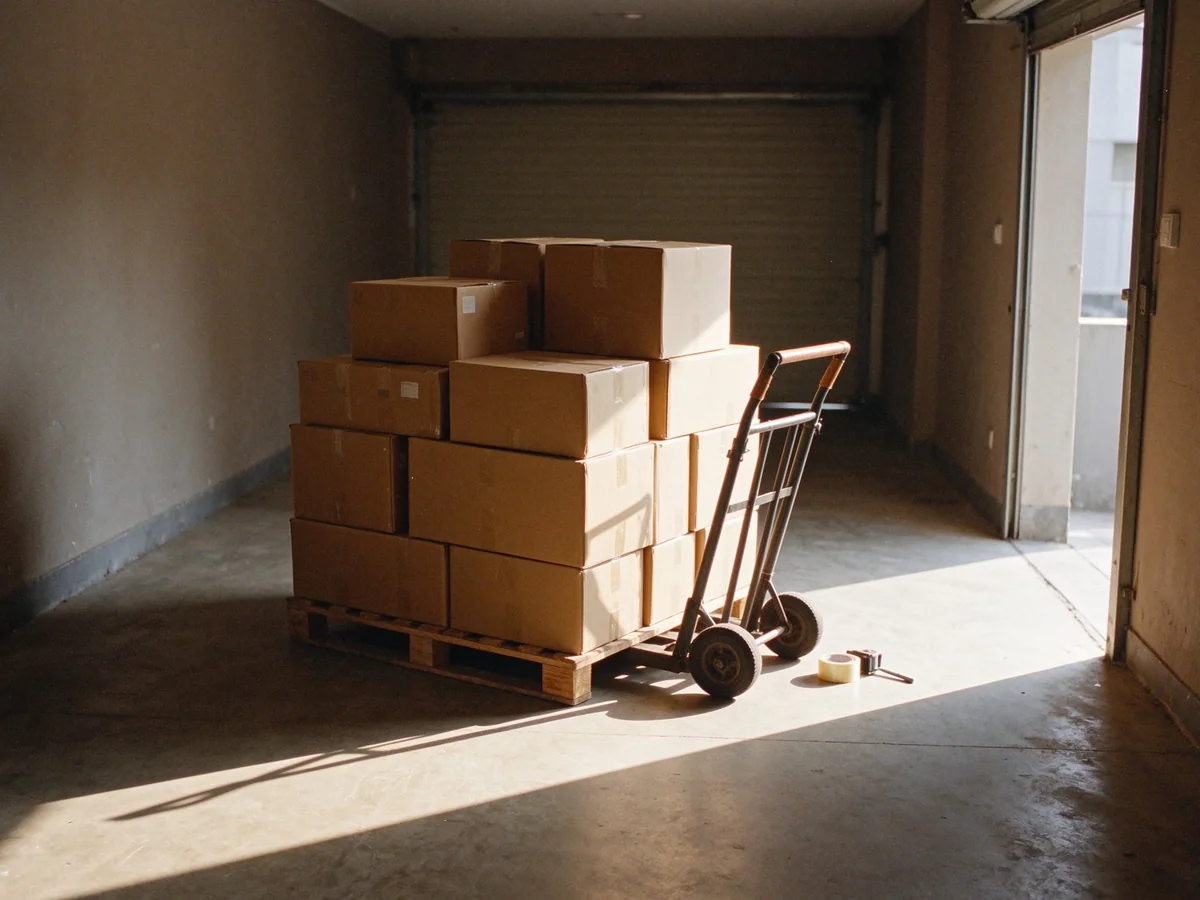
What a hanger order actually costs
The unit price on a quotation is one line of a longer sum. By the time a hanger reaches a store room, it has accumulated: the board and the finish, the mark, the carton, the pallet, the freight, the duty, and the labour of unpacking it. Two suppliers quoting the same unit price can deliver different landed costs, and two quoting different unit prices can land the same.
This guide is the commercial half of the specification: the numbers that sit outside the six specification fields but decide what an order really costs.
Why the cheapest quotation rarely is
Every line in the table below is a place where a quote can be made to look lower without being cheaper. A lower unit price with a higher carton count; a low price with freight excluded; a low price that assumes a thinner panel. None of these are tricks in the sense of dishonesty — they are choices, and each one has a consequence that shows up later in the process or on the invoice.
The buyer's job is not to find the cheapest number but to make the numbers comparable. That is a five-minute exercise once the fields are known and a week of email if they are not.
The components, in the order they appear
Why landed cost per hanger is the number that matters
A lower unit price with a lower carton count is not automatically cheaper per piece: the carton count changes pallet height, container utilisation and freight per piece, and on a 1,000-piece order the freight difference can exceed the difference in unit price.
The comparison only works when both quotes are normalised to the same quantity, the same packing and the same delivery point. That is what the last section of this guide is for.
| Component | Who usually bears it | What moves it |
|---|---|---|
| Unit price | buyer | wood, thickness, finish, logo method |
| Tooling or die | buyer, one-off | new profile, nameplate shape, stamping die |
| Sample and its freight | buyer | whether a physical sample is shipped |
| Packing | buyer | polybag or wrap-free, cartons, labels |
| Inland freight to port | seller or buyer, by term | port choice, distance |
| Ocean freight and insurance | buyer, by term | CIF or FOB or DDP |
| Duty and clearance | buyer, by term | destination, HS code, DDP exceptions |
| Unpacking and handling | buyer | carton count, pallet format |
MOQ: why 150 per model and colour
The rule
Custom lines start at 150 pcs per model and colour. Stock lines ship from 10 pcs. The two numbers answer different questions: 150 is what a production run needs to be worth setting up; 10 is what a warehouse pick needs to be worth packing.
Why it is per model and colour
Because the setup is per combination. A run has to be scheduled, the profile set up, the finish mixed and the line cleared; doing that once for 150 of one combination is what the price assumes. Splitting the same 150 across three colours triples the setup, and the quotation reflects it.
A mixed order is perfectly normal — four models at 150 each is 600 pieces — as long as each combination reaches its own minimum.
How to split an order without breaking the minimum
Two levers, both legitimate. The first is to reduce the number of combinations: two models in one colour reaches 300 pieces at 150 each, where four models in two colours is 1,200 before the order is worth setting up. The second is to move part of the range to a stock line — a fixed finish that ships from 10 pieces — and keep the custom minimums for the items where the finish matters.
What does not work is asking for 150 pieces split five ways. The setup is the cost the minimum protects, and splitting it does not reduce the setup; it multiplies it.
Why stock lines exist
Not every buyer needs a custom run. A property topping up a room block, a shop testing a rail, or a distributor sampling a market can order from stock lines from 10 pieces. The stock line is a fixed model in a fixed finish; the trade-off is choice, not quality.
Where a buyer wants a custom finish on a stock model, the order becomes custom and moves to the 150 minimum — that is the boundary worth knowing before the brief is written.
Lead time: three clocks, not one
The clocks
Sample: 7–15 days, and it starts when the specification is agreed rather than when the enquiry arrives. Production: 25–35 days after artwork and sample approval. Transit: by sea or air, decided by the term.
The full cycle from brief to departure is 40–55 days. That number is not a buffer; it is the sum of two processes that cannot overlap, because production waits for the approved sample.
What starts each clock
What delays a first order
Three things, in order of frequency: an incomplete specification, a sample approved by photograph and then disputed, and artwork that arrives after the sample rather than before. All three are buyer-side delays, and all three are avoidable with the checklist at the end of this guide.
A supplier's calendar is not the problem in most late projects. The sample loop is.
Planning backwards from a launch date
Work backwards from the date the rooms open or the range goes on the rail, and leave a margin for the two things that always move: the sample approval and the sailing.
A worked back-plan for a first order with a hard date: 40–55 days for production and sampling, plus the sailing time, plus two weeks of buffer for the sample loop. A launch in twelve weeks is comfortable; a launch in seven weeks is tight but possible if the specification is already written; a launch in five weeks is a stock-line order or a missed date.
Telling a supplier the real date is more useful than telling them "as soon as possible", because it changes the recommendation — a stock line instead of a custom finish, or a faster port — rather than only the pressure.
Why a reorder is faster
A reorder of an existing specification is 25–35 days after artwork approval, with no sampling window, because the sample and specification already exist. That is the commercial value of the batch record — it converts a first order into a repeat.
| Stage | Reference | Starts when |
|---|---|---|
| Quotation | 2–3 days | brief received with the six fields |
| Sample | 7–15 days | specification agreed and sample cost confirmed |
| Approval | 1–3 days | sample received by the buyer |
| Production | 25–35 days | artwork and sample approved |
| Inspection and packing | included in production | line finished |
| Documents and dispatch | 1–2 days | payment terms met |
Trade terms: what each one actually means
The five terms we quote
Which term to choose
FOB is the default for a first container: the price is comparable, the freight is visible and the buyer controls the forwarder. CIF removes a coordination step but hides the freight inside the unit price, which makes comparison harder. DDP is convenient for a first order into a market the buyer does not know, and most expensive per piece because the seller carries the risk.
EXW is rarely the right answer for a new buyer — the savings are real but the obligations at origin are theirs, and a factory gate is not a shipping plan.
Who arranges what
The table is the whole reason terms exist: each one moves a task and a risk from one side to the other. Choosing a term is choosing which tasks you want to own.
Ports
Nansha, Shekou or Ningbo. The port is a line in the quotation, not a preference: it changes inland haulage and sailing schedules. Where a buyer has a forwarder with a preferred port, say so at quotation rather than after the booking.
Payment
T/T, credit card and PayPal, quoted in USD, EUR, GBP or CAD. Payment stages are set out in the quotation rather than assumed, because they depend on the order size, the relationship and whether tooling is involved. Tooling is normally payable before the tool is made; that is a one-off, not a stage of the goods payment.
| Term | Who pays main freight | Risk passes | Suits |
|---|---|---|---|
| EXW | buyer | at the factory | buyers with their own forwarder |
| FOB | buyer | when loaded at the port | the most common for container orders |
| CIF | seller | when loaded, but seller insures to destination | buyers who want freight managed |
| DDP | seller | at destination, duty paid | buyers who want a single delivered price |
| DDU | seller | at destination, duty unpaid | buyers with their own customs broker |
| Under | Seller arranges | Buyer arranges |
|---|---|---|
| EXW | packing, ready at factory | export clearance, inland, ocean, import |
| FOB | export clearance, inland to port, loading | ocean, insurance, import |
| CIF | everything to destination port, insurance | import clearance, inland |
| DDP | everything to destination, duty paid | unloading |
| DDU | everything to destination, duty unpaid | duty, import clearance |
Documents and packing
What travels with a shipment
A commercial invoice, a packing list, origin documents, and — where the destination requires it — the wood-packaging documents that go with treated packing. The packing list is the one that matters most on arrival, because it is the document the receiving team works from.
Good documentation is unglamorous and decisive: an order that arrives with a clear packing list, cartons labelled by model and a photo of the loaded pallet is an order that gets received in an afternoon.
Packing decisions that belong in the quotation
Three, and all three move the price: units per carton, inner protection, and the label rule. Cartons hold volume rather than a count, so the number of hangers per carton follows the thickness — about 50 at 1.2 cm, about 35 at 2–3 cm, 20–25 at 4–4.5 cm — and that number decides pallet height and freight.
Inner protection is a choice between unpacking time and transit protection: polybag per piece is slower to open and more protective; wrap-free with board between the shoulders is faster and produces less waste. Neither is better without knowing where the pallet is going.
Labels are the third: per SKU, per floor, per room block, or neutral. A property wants floor labels; a distributor wants their own SKU. Write it on the order rather than in a follow-up email.
Where inspection sits in the commercial picture
Inspection is part of production, not a separate purchase: the batch is checked against written criteria before cartoning, and the result is recorded. That record is what a buyer relies on if a dispute arises months later, and it is also what makes a reorder a repeat rather than a new order.
Where a buyer sends their own inspector, the date should be agreed before the line runs, because a visit that arrives after cartoning can only check the outside of the boxes. The quality page sets out what each batch is checked against.
What to request before shipping
Three documents and one photograph: the packing list with carton counts by model, the carton dimensions, the label wording, and a photo of the finished pallet. The photograph is the cheapest quality check in the whole process.
What a quotation should itemise
The lines that make it checkable
A quotation that can be checked has eight lines: unit price per model and colour; packing cost; tooling or die, if any; sample cost and freight; term and port; tooling lead time separate from production lead time; payment stages; and validity.
The last one matters more than it looks. Wood and freight move, so a price has a shelf life; a quotation without a validity date is a price that may not be honoured by the time the order is placed.
What a range list is, and is not
A range list — the PDF a buyer requests before shortlisting — gives indicative pricing at a stated quantity. It is a budgeting tool: useful for comparing models, not a commitment. The quotation for a specific order is the commitment, and the two can differ because wood costs and freight move between the list being published and the order being placed.
How to read a lead-time line
A lead time written as "30 days" is ambiguous: thirty days from what? From payment, from artwork, from the order being placed? The honest version names the trigger — production is 25–35 days after artwork and sample approval — because that is the date the factory actually controls.
The same applies to shipping: transit time is the forwarder's, and naming a port and a route makes it checkable. A quote that says "delivery in 45 days" without naming the trigger and the port is a hope, not a schedule.
Why itemising matters to both sides
A supplier who itemises invites comparison; a supplier who quotes one number invites a conversation about margin. For the buyer, itemisation is the only way to see what changed when a price moves — and to negotiate the part that actually moved rather than the whole number.
Comparing quotes fairly
Normalise first
Four lines make quotes comparable: the same quantity, the same packing, the same delivery term and the same specification. Where any of the four differs, the quote is describing a different order.
A comparison sheet
What a cheap quote usually means
A unit price materially below the others is one of four things: a thinner panel, a smaller carton count, a different finish system, or a term that excludes freight. None of them is dishonesty; all of them are assumptions in a sentence. The way to find out is to ask for the four numbers behind the price — thickness, carton count, finish description and term.
| Line | Check | Why it changes the answer |
|---|---|---|
| Specification | all six fields stated | a missing field is a different product |
| Quantity | per model and colour | minimums apply per combination |
| Packing | units per carton and label rule | freight and receiving labour |
| Term | EXW / FOB / CIF / DDP | freight is inside or outside the price |
| Tooling | included or separate | a one-off hidden in a unit price is not comparable |
| Sample | cost and freight stated | a "free" sample usually is not |
| Lead time | sample plus production | a short production time with a long sample time is not shorter |
| Payment | stages named | cash flow is part of the price |
The five buying mistakes we see most
1. Specifying the length, not the thickness
A "45 cm hanger" is half a specification. Two hangers of the same length, one at 1.2 cm thickness and one at 4.5 cm, are different products with different carton counts and different prices.
2. Approving a sample from a photograph
Colour and depth do not survive a screen. The sample is approved in the hand, under the light the product will live in — otherwise the first complaint arrives with a photo attached, and the argument is unresolvable.
3. Comparing unit prices across different terms
A FOB price and a DDP price are not comparable by construction. Normalise to one term before comparing, and normalise the packing with it.
4. Leaving packing to the supplier
Packing is the field most often left blank, and the one that decides the landed cost. Units per carton, inner protection and label rule are three decisions the buyer should make, not inherit.
5. Forgetting the second order
The first order is a project; the second is a habit. A buyer who does not ask for the batch record on the first order pays for it on the second — in a new sample, a new tone, or a floor that no longer matches.
What we cannot promise
The honest limits
A quotation fixes the price for the specification quoted; the range list only indicates. Prices move with wood and freight, which is why a list is a budgeting tool and a quotation is a commitment.
Lead times are working days, not guaranteed delivery dates: they start when the sample and artwork are approved, and they cannot overlap. Transit time is the forwarder's, not ours, and varies by route and season.
The one number we will not quote from memory
Wood cost and freight both move, and a supplier who quotes a firm price months in advance is either carrying that risk in the price or will re-quote later. A quotation with a validity date is the honest version: it says what the price is, for how long, and what it depends on.
For a buyer planning a year ahead, that means two quotations rather than one — a current price for the order in front of you, and a range for budgeting the programme behind it. The downloads page is where the range list sits; the quotation is where the commitment sits.
What can be promised
A sample made against the written specification, an inspection against written criteria, a batch record that makes a reorder a repeat, and a quotation that itemises what is included and what is separate. Those four are the parts of the transaction that a factory actually controls.
Where to go next
The specification itself is covered in the hanger specification guide and in the specification sheet article; quantities for a hotel order in the room-block method; thickness and cartons in the thickness guide; and reorders in the batch matching article.
The product range is on the products page, the OEM and ODM scope on the customized service page, the packaging options on the distributor programme, and specification sheets can be requested from downloads. The FAQ carries the shorter answers.
If the order is part of a hotel programme rather than a range, the arithmetic and the batch discipline live on the hotel programme page and in the room-block method. If it is a private-label programme, the carton and the mark are proofed together on the private-label route. Both change the commercial picture only in one way: they add a proofing round before production.
Send the six specification fields, the quantity per model and the destination, and the quotation will come back against a real order rather than an assumption. Nothing here overrides a written quotation: the quotation names the price, the term and the dates, and it is the document that binds.
FAQ